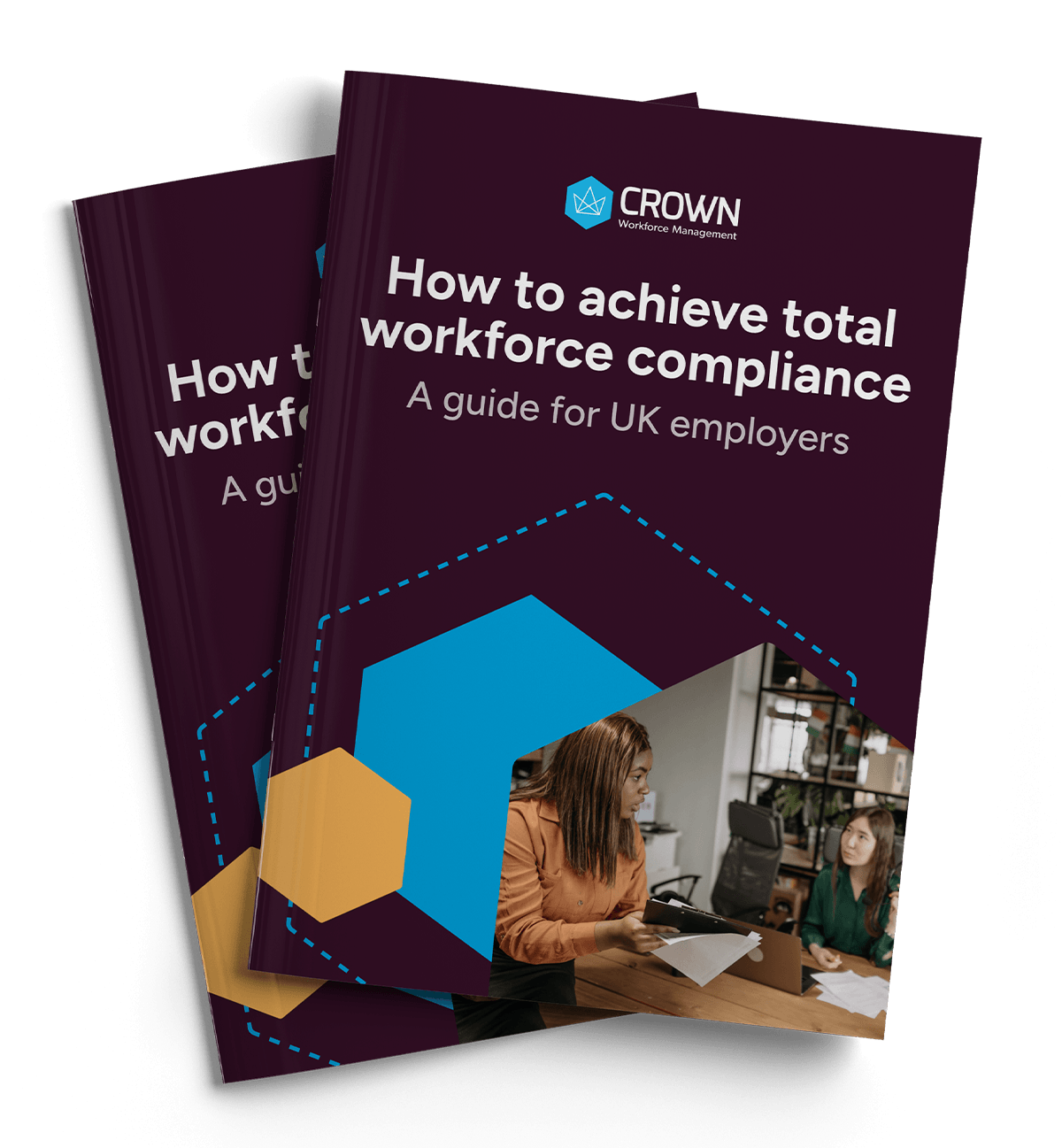



How to achieve total workforce compliance
Workforce compliance is a critical responsibility for UK employers, covering everything from working time and pay to absence, data security and health and safety. With the Employment Rights Act 2025 now coming into force, the demands on employers are growing.
This free guide covers every major risk area, explains what the Employment Rights Act 2025 means in practice and includes a self-assessment checklist to help you identify compliance gaps today.
Download your free ebook
By submitting this form I agree to my details being used in sole connection with the intended enquiry. Please check our privacy policy to see how we protect and manage your submitted data.


What you’ll get from this free guide
What total workforce compliance means for UK employers in 2026 and beyond
Understand the full scope of your obligations across working time, minimum wage, payroll, GDPR and absence management, and where the highest-risk gaps typically appear.
Assess your current compliance position in 15 questions
Use the self-assessment checklist to audit your organisation across every key area covered in the guide, identify gaps and prioritise where to act first.
What the Employment Rights Act 2025 requires of employers
The Act is the most significant employment legislation in a generation. Learn which provisions are already live, what is still coming, and the specific actions your organisation needs to take across scheduling, record-keeping and absence management.
Where the real cost of non-compliance is hiding
Statutory fines and tribunal awards are only part of the picture. Discover the hidden costs that rarely appear on paperwork but compound quickly.
How to build a compliance strategy your organisation can sustain
See how workforce management technology automates the foundation, from compliant scheduling and real-time time tracking through to payroll integration and auditable absence records.
Ready to achieve total workforce compliance?